Last Updated: August 7, 2026
- Why Setting Boundaries With Your Ex Partner Matters
- Scripts for Setting Boundaries With an Ex: Real Conversation Examples
- Examples of Boundaries With an Ex: What Healthy Looks Like
- Setting Boundaries With Your Ex When You Have Kids
- How to Deal With an Ex Who Ignores Boundaries
- Common Mistakes When Setting Boundaries With Your Ex
- Frequently Asked Questions
Why Setting Boundaries With Your Ex Partner Matters
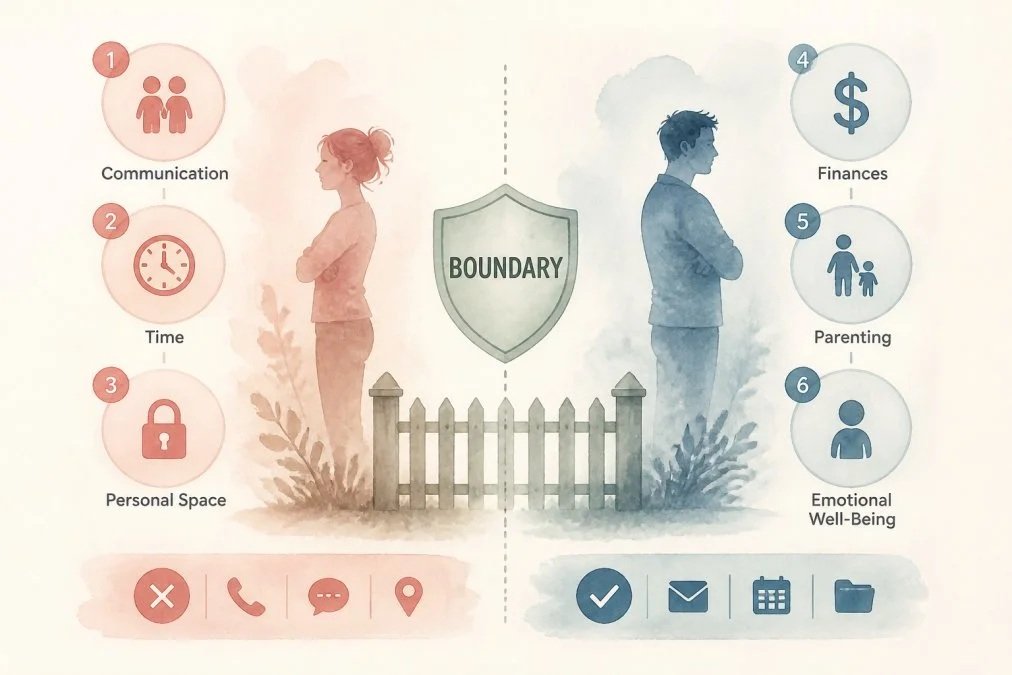
Setting boundaries with an ex partner is critical for reclaiming your emotional well-being after a relationship ends. Without clear limits, your ex’s behavior can destabilize your healing and undermine your self-preservation.
The stakes are higher when children are involved. Research shows that children exposed to ongoing parental conflict experience measurable increases in anxiety and behavioral problems. Your boundaries protect everyone involved, including your kids.
Healthy boundaries aren’t about being cold, they’re about predictability. When your ex knows exactly what you will and won’t tolerate, manipulation becomes harder, conflict decreases, and interactions shift from emotionally charged to transactional.

Scripts for Setting Boundaries With an Ex: Real Conversation Examples
Scripts work because they remove emotional charge from conversations. When triggered, your nervous system is already activated. A script keeps you on track and prevents regrettable statements or reopened negotiations.
Script 1: The Initial Boundary Conversation
Use this when establishing boundaries for the first time.
Opening: “I need to talk about how we’re going to communicate going forward. This isn’t about blame, it’s about creating a structure that works for both of us.”
State the boundary: “Going forward, I need our conversations to be about [specific topic: the kids / logistics / finances]. Personal matters are off-limits.”
Explain the why (briefly): “This isn’t punishment. It’s what I need to move forward and be the best parent/person I can be.”
Set the method: “I prefer we communicate via text or email about logistics. If it’s urgent and involves the kids, you can call. Otherwise, I’ll respond within 24 hours.”
Close with clarity: “I’m committed to being respectful and cooperative within these boundaries. I expect the same from you.”
Your ex may push back, that’s normal. Stay calm and repeat: “This is what I need. I’m open to discussing the logistics of how we communicate, but the boundary itself isn’t negotiable.”
Script 2: Responding to Boundary Violations
Immediate response: “That doesn’t work for me. Here’s what I need instead: [restate the boundary].”
If it happens again: “This is the second time you’ve [specific violation]. If this continues, I’m going to [specific consequence: stop responding to non-emergency texts / limit communication to email / involve a mediator].”
If it escalates: “I’ve made my boundary clear multiple times. Going forward, any non-emergency communication needs to go through [mediator / co-parenting app / attorney].”
You’re documenting the pattern, giving clear warnings before escalating, and removing the emotional reward your ex might seek. This creates a paper trail if you eventually need legal support.
Script 3: Managing Emotional Manipulation
Manipulation tactic: “I know you’re upset with me, but the kids miss me. Don’t you think it’s unfair to keep them from their father/mother?”
Your response: “The kids’ relationship with you isn’t something I’m controlling. They can see you during [scheduled time]. If you want more time, we can discuss that through [mediator / co-parenting app / attorney].”
Another tactic: “I’ve changed. Can’t we just move past this?”
Your response: “I’m glad you’re working on yourself. Right now, I need to focus on my own healing. Our relationship as co-parents can be respectful without us being close.”
Another tactic: “You’re being so cold. Is this really what’s best for the kids?”
Your response: “Being clear about my boundaries is what’s best for the kids. It shows them that healthy relationships involve respect and honesty about what people need.”
You’re not defending yourself or justifying, you’re restating your position and reframing boundaries as protective, not punitive.
Examples of Boundaries With an Ex: What Healthy Looks Like
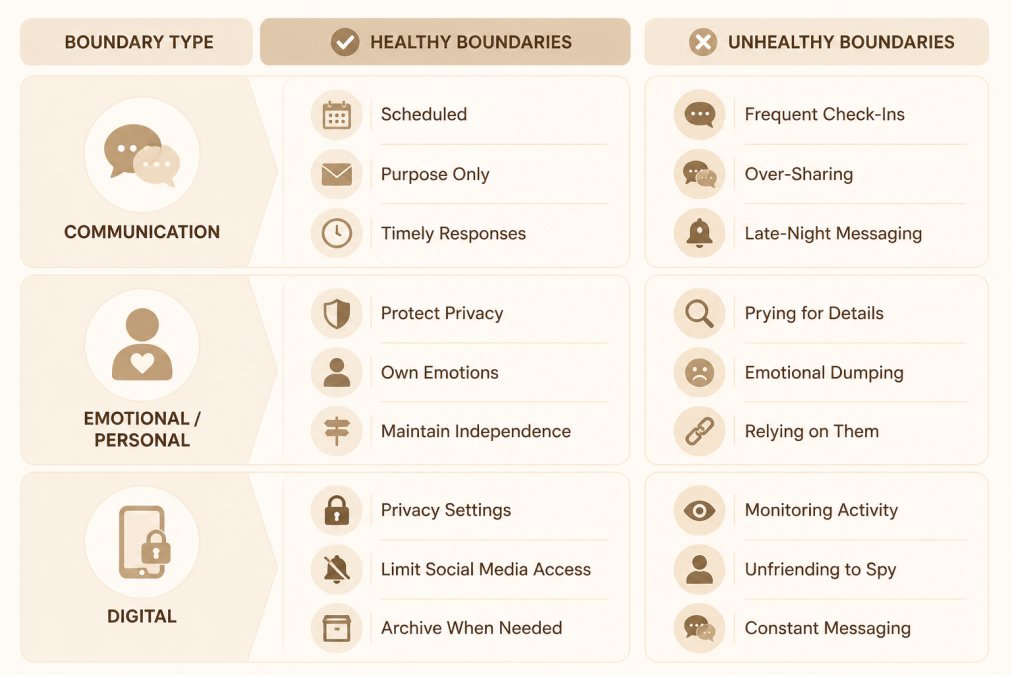
Healthy boundaries fall into three categories: communication, emotional and personal space, and digital. Each requires different rules and enforcement strategies.
Communication Boundaries
Communication boundaries define what topics are on-limits, what methods you’ll use, and what response times you’ll maintain.
Healthy communication boundaries include:
- Topics limited to co-parenting logistics, financial obligations, and scheduling. Personal matters and past relationship issues are off-limits.
- Method specified: text or email for routine matters, phone calls only for emergencies involving children.
- Response time: 24 hours for non-urgent messages, immediate response only for genuine emergencies.
- No late-night or early-morning messages about non-urgent topics. Communication between 8 a.m. and 8 p.m. only.
- No venting, rehashing the past, or attempts to convince you to change your mind about the separation.
In practice: Your ex texts at 10 p.m. about something non-urgent. You don’t respond that night. The next morning, you send a brief message about the specific issue only. You don’t ask how they are or acknowledge personal content. Over time, your ex learns that they get a response only when staying within boundaries. Manipulation attempts decrease because they stop working.
Emotional and Personal Space Boundaries
These boundaries protect your internal world, healing process, new relationships, and mental health.
Healthy emotional and personal space boundaries include:
- Your ex is not entitled to information about your dating life, therapy, finances beyond legal requirements, or emotional state.
- No surprise visits. Scheduled handoffs only, at agreed-upon times and locations.
- Your home is your space. Your ex does not enter unless absolutely necessary.
- Your new relationships are not your ex’s business. You don’t discuss them with your ex.
- You do not accept responsibility for your ex’s emotional well-being. If they’re struggling, they need a therapist.
In practice: Your ex calls saying they’re depressed about the divorce. You listen briefly, then say, “I’m sorry you’re struggling. I’d recommend talking to a therapist about that.” You hang up. You do not become their emotional support system. This boundary is non-negotiable because your emotional energy belongs to your children and your own healing.
Digital and Social Media Boundaries
Digital boundaries protect you from 24/7 harassment, monitoring, and triggering exposure to your ex’s activities.
Healthy digital boundaries include:
- Mute or unfollow your ex on all social media. You do not need to see their posts.
- Do not post about your personal life, new relationships, or anything that could be used against you in a custody dispute.
- Do not respond to likes, comments, or reactions from your ex.
- Use a co-parenting app for all communication about children. This creates a documented record.
- Do not share your location, calendar, or passwords with your ex.
- Block your ex’s number if they’re harassing you via text. Redirect all communication to the co-parenting app.
In practice: You delete your ex from all social media, set your profile to private, and use a co-parenting app for all communication. If your ex texts personally, you don’t respond. Within weeks, they stop trying because they’ve learned it doesn’t work.

Setting Boundaries With Your Ex When You Have Kids
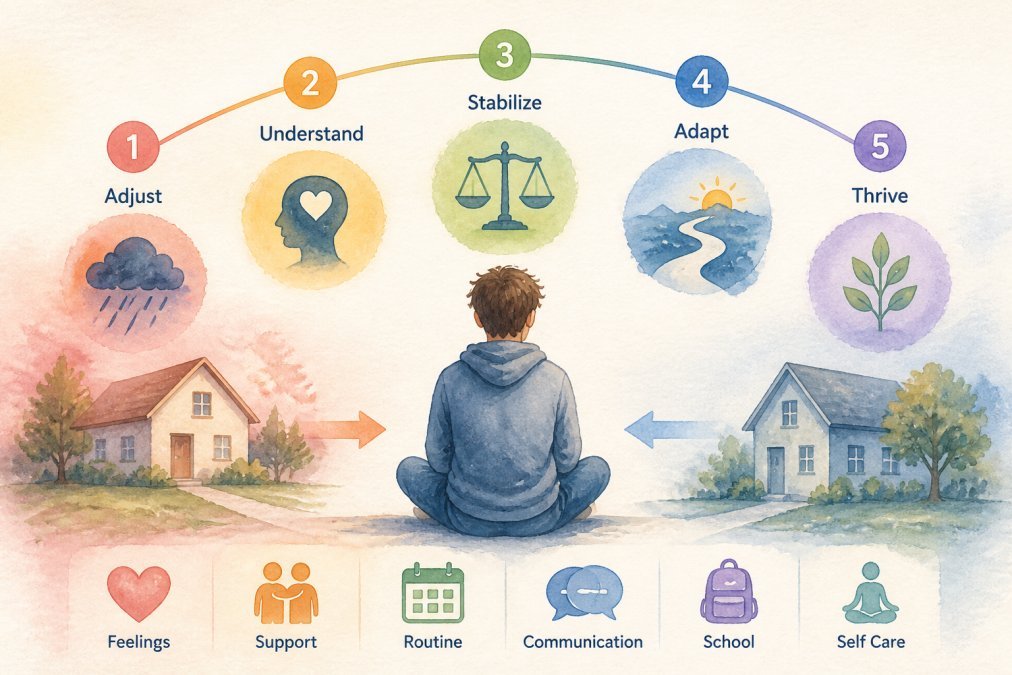
When you have kids, your ex remains a permanent fixture in your life. You must create a system that allows effective co-parenting while protecting your children from conflict and emotional manipulation.
Co-parenting Communication Protocols
Co-parenting communication protocols are structured systems that remove emotion from logistics. They’re meant to be functional, not friendly.
Establish these protocols early:
- Use a dedicated co-parenting app for all communication about children. This creates a documented record and removes temptation to slip into personal attacks.
- Schedule a weekly 15-minute check-in call focused solely on children’s logistics: upcoming appointments, school events, behavioral issues, health concerns.
- Create a shared calendar for children’s activities, appointments, and custody schedule.
- Establish a rule: no discussion of the other parent’s personal life, dating, finances, or household decisions.
- Define what constitutes an emergency. A fever is an emergency. A missed homework assignment is not.
In practice: Monday evenings at 6 p.m., you and your ex have a 15-minute call about the children’s upcoming week. You problem-solve together on logistics only. When 6:15 p.m. arrives, you end the call. This predictability is calming for both parents and children.
Protecting Children From Conflict
Children are highly attuned to parental conflict. Even if you and your ex aren’t actively fighting, children sense ongoing hostility and experience stress.
Protect children by:
- Never speaking negatively about your ex to your children, regardless of what they’ve done.
- Do not ask your children to relay messages to your ex. Use direct communication.
- Do not ask your children questions about your ex’s personal life, new relationships, or finances.
- Do not allow your children to witness conflict.
- Do not involve your children in custody disputes, legal matters, or adult emotional processing.
- Maintain consistency across households as much as possible.
In practice: Your ex says something negative about you to your child. Your child repeats it to you. Instead of defending yourself or attacking your ex, you say: “Your mom/dad and I have different perspectives on things. That’s okay. You’re loved by both of us, and that’s what matters.” You address the issue with your ex separately, calmly.
How to Deal With an Ex Who Ignores Boundaries
Not all exes respect boundaries immediately. Some test them repeatedly. Some escalate when they realize you’re serious. Knowing how to respond is essential.
Recognizing Boundary Violations
A boundary violation is any behavior that crosses the line you’ve established. It can be obvious or subtle.
Common boundary violations include:
- Texting or calling outside agreed-upon communication windows.
- Asking your children questions about your personal life, new relationships, or finances.
- Showing up at your home, workplace, or children’s school without prior arrangement.
- Discussing the divorce or personal attacks in front of children.
- Attempting to negotiate custody or support outside formal channels.
- Monitoring your social media, location, or activities.
- Using children as messengers or emotional support for adult problems.
- Refusing to follow the custody schedule or consistently being late for handoffs.
- Threatening legal action as a way to control or intimidate you.
Escalation Steps and Enforcement
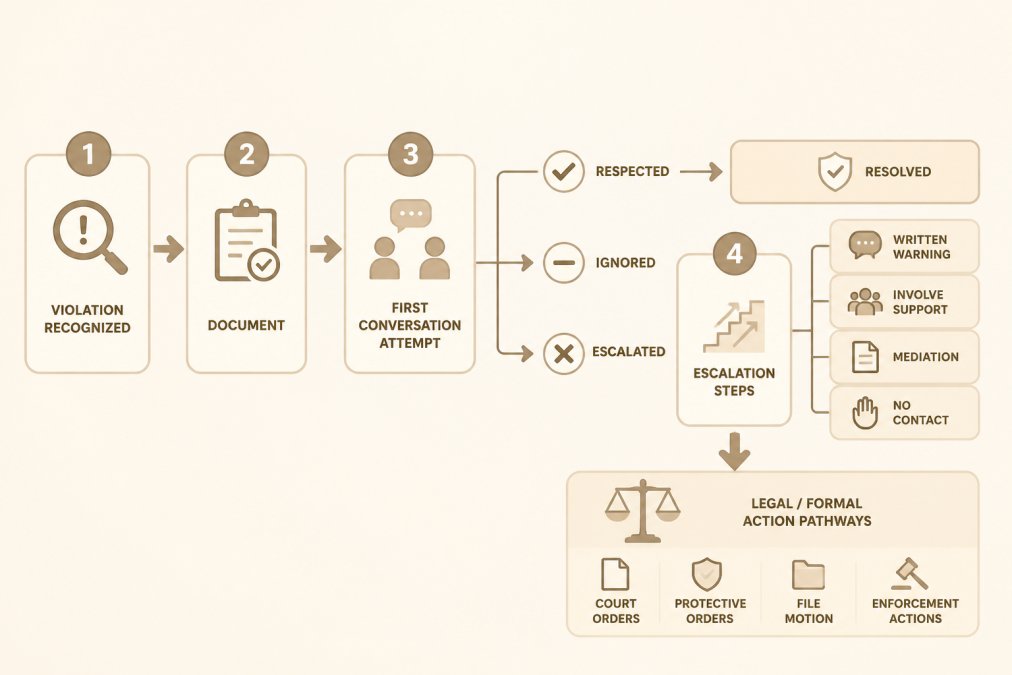
Boundary enforcement is a progression. You start with a calm reminder, then escalate if behavior continues.
Step 1: Calm reminder. The first time a boundary is crossed, respond calmly and directly. “That text came outside our communication window. Please use the co-parenting app for non-emergencies going forward.”
Step 2: Documentation. If the violation happens a second time, document it. Take a screenshot, note the date and time, and save it.
Step 3: Formal reminder. If the violation happens a third time, send a formal message through the co-parenting app or email. “I’ve asked you multiple times to respect our communication boundaries. Effective immediately, all non-emergency communication must go through [app/email].”
Step 4: Shift the method. If your ex continues to violate the boundary, change how you communicate. Stop responding to personal texts. Redirect them to the co-parenting app. They’ll eventually learn the boundary is real.
Step 5: Legal involvement. If violations are serious (harassment, threats, interference with custody) or your ex refuses to respect any boundaries, consult with your attorney. You may need a formal custody order or restraining order.
Common Mistakes When Setting Boundaries With Your Ex
Mistake 1: Being inconsistent. You set a boundary, enforce it for a week, then let it slide. This teaches your ex that your boundary isn’t real. Consistency is everything.
Mistake 2: Over-explaining or defending your boundaries. You don’t owe your ex an explanation. “Going forward, communication is limited to co-parenting logistics.” That’s it.
Mistake 3: Slipping into personal conversation. Keep responses to logistics only. Do not reciprocate personal questions.
Mistake 4: Using the children as messengers. Communicate directly with your ex, even if uncomfortable.
Mistake 5: Feeling guilty. Guilt is a manipulation tactic. Healthy boundaries feel uncomfortable at first because you’re changing the dynamic. That discomfort is normal.
Mistake 6: Escalating emotionally. Stay calm and professional. Let your consistency do the work.
Mistake 7: Expecting your ex to respect boundaries without enforcement. You have to enforce the boundary by not responding to violations, redirecting communication, or escalating to formal channels. Enforcement is what makes boundaries real.
Setting boundaries with an ex partner is one of the most important investments you can make in your own recovery and your children’s well-being. The scripts and examples in this guide provide a foundation, but the real work is consistency, saying what you mean, meaning what you say, and following through every single time.
The process is uncomfortable. Your ex may escalate, guilt-trip, or threaten legal action. These are predictable responses to boundaries, not evidence that your boundaries are wrong. In fact, pushback is a sign that your boundaries are working, they’re preventing your ex from continuing destabilizing behavior.
After the Affair Series offers structured frameworks and scripts designed specifically for high-conflict co-parenting and boundary enforcement. The free 23-point assessment helps you understand your current situation and identify the specific boundaries you need to establish first.
Your boundaries aren’t selfish. They’re the foundation of your healing and your children’s safety. Start with one boundary, enforce it consistently, and build from there. You don’t need permission. You don’t need your ex’s agreement. You need clarity, consistency, and the willingness to follow through.
Frequently Asked Questions
What are the signs of poor boundaries with an ex-partner?
Poor boundaries show up as constant unplanned contact, sharing personal details about your new life, accepting late-night calls or texts, allowing them to show up unannounced, or letting them dictate your schedule around their needs. You might also find yourself defending your decisions, over-explaining your choices, or feeling guilty when you enforce limits. The key signal is that your emotional well-being suffers after interactions, you feel drained, anxious, or manipulated. Healthy boundaries leave you feeling respected and in control of your own time and space.
How do you communicate boundaries to an ex without causing conflict?
Use clear, direct language focused on facts, not emotions. State the boundary once in a calm tone: ‘I’m only available for co-parenting discussions between 9 AM and 5 PM on weekdays.’ Avoid justifying, defending, or explaining your reasoning, this invites negotiation. Keep messages brief and unemotional. If they push back, repeat the boundary without elaborating. Consistency matters more than tone; enforcing the same limit repeatedly teaches them you’re serious. Written communication (email, co-parenting apps) gives you a record and prevents escalation in real-time conversations.
Can scripts for setting boundaries with an ex actually work if they refuse to listen?
Scripts work best when they’re paired with consistent enforcement and realistic expectations. If your ex is genuinely high-conflict or ignores repeated boundaries, scripts prevent you from getting drawn into arguments or emotional reactions, which is a win even if they don’t comply. The real power is protecting your own mental health and modeling healthy communication for your children. For truly hostile situations, documented communication through co-parenting apps or written letters creates accountability and a legal record if needed. Scripts can’t force compliance, but they can prevent escalation and keep you grounded.
What’s the difference between legal boundaries and personal boundaries with an ex?
Legal boundaries are enforced by court orders, custody agreements, and child support arrangements, they’re non-negotiable and have consequences if violated. Personal boundaries are the limits you set to protect your emotional well-being, privacy, and time, they’re enforced by your own consistency and consequences you choose (like limiting contact). Both matter: legal boundaries protect your rights and children; personal boundaries protect your healing. You may have a legal right to 50/50 custody but still need a personal boundary about not accepting last-minute schedule changes. Combining both creates a complete protection framework.