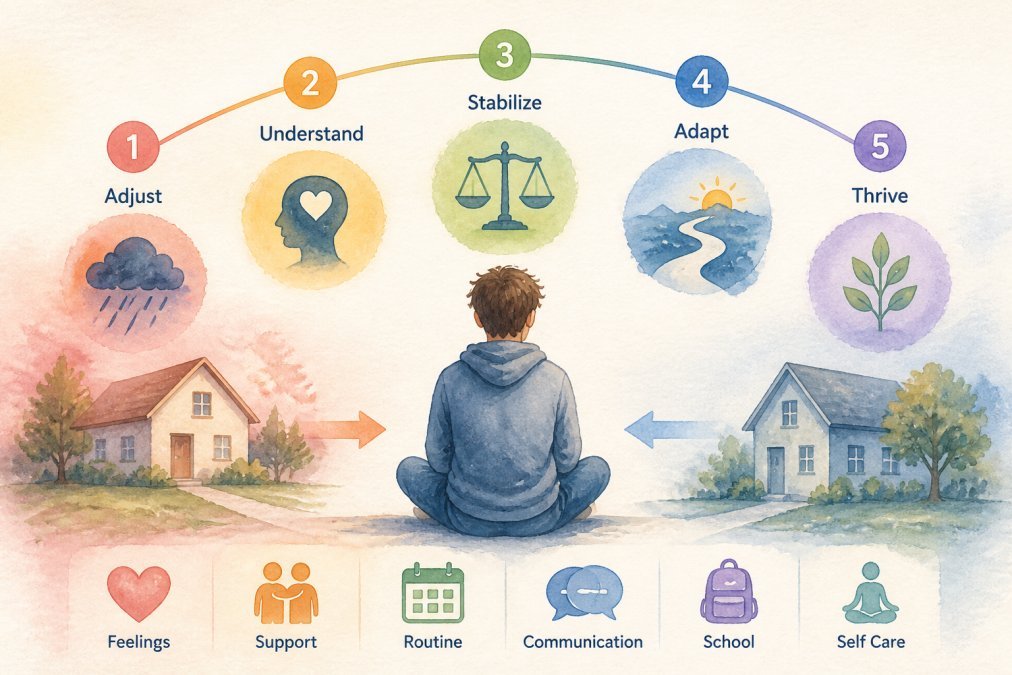
Communication accelerates healing by creating psychological safety, aligning goals between people in distress and those supporting them, and improving the behavioral follow-through that recovery actually requires. The role of communication in healing is not peripheral or supportive in a soft sense. Research identifies it as a direct causal mechanism.
- Trust and safety: When someone feels heard and believed, their nervous system settles enough to engage with recovery rather than defend against further harm.
- Shared understanding: Aligned goals between a patient and clinician, or a betrayed partner and their spouse, reduce the confusion that stalls progress.
- Emotional regulation: Validation and attunement help people tolerate distress instead of shutting down or escalating.
- Adherence and activation: Clear, collaborative communication produces measurable improvements in whether people follow through on treatment plans and recovery steps.
- Social support: Expressed, received support through conversation buffers the physiological stress response during recovery.
The claims throughout this article draw on peer-reviewed pathways research, clinical guidance from the American Academy of Family Physicians (AAFP), and interprofessional frameworks including SBAR and TeamSTEPPS.
- Key Takeaways
- How does communication actually produce healing outcomes?
- What is therapeutic communication, and where did it come from?
- Practical communication techniques that support recovery
- How communication works in recovery and family healing
- What trauma-informed communication gets right that most practitioners miss
- Common barriers to healing communication and how to reduce them
- What the research actually shows about communication and outcomes
- How to prepare for an important healing conversation
- Why communication-centered healing matters beyond theory
- Aftertheaffair resources for applying these techniques to betrayal recovery
- FAQ
Key Takeaways
Communication is a direct mechanism of healing, not a soft skill, because it operates through seven documented pathways that connect dialogue to measurable clinical and emotional outcomes.
| Point | Details |
|---|---|
| Seven healing pathways | Communication works through access, knowledge, decisions, trust, emotion regulation, social support, and adherence. |
| Teach-back confirms alignment | Asking someone to repeat information in their own words is more reliable than asking if they understood. |
| Trauma-informed sequencing | Validate and create safety before problem-solving; survivors need to feel seen before they can receive information. |
| Barriers require specific fixes | Low health literacy, time pressure, and defensive reactions each need a targeted countermeasure, not a general communication improvement. |
| Aftertheaffair resources | Structured scripts and checklists from Aftertheaffair operationalize these techniques for betrayal recovery. |
How does communication actually produce healing outcomes?
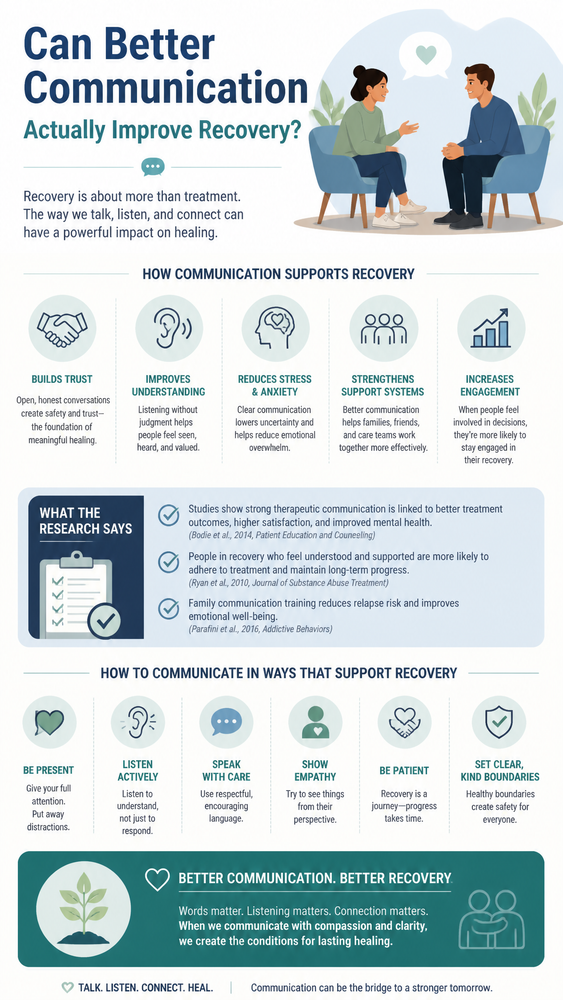
The most useful framework comes from a pathways review that identifies seven distinct routes through which clinician-patient communication translates into health outcomes. Each pathway operates differently, and understanding them helps you target the right communication behavior for the right moment.
Access and engagement. Communication that reduces stigma, answers questions clearly, and signals non-judgment brings people into care who would otherwise avoid it. A clinician who opens with “What made it hard to come in today?” activates this pathway.
Patient knowledge and shared understanding. When someone understands what is happening in their body or their relationship, they can make better decisions. Misunderstanding is not a character flaw; it is usually a communication failure.
Higher-quality decisions. Shared decision-making, where the clinician or supporter presents options with honest trade-offs and elicits the patient’s values, produces decisions people actually commit to. Patient-centered communication research in cancer care shows that aligning patient perspectives with care plans improves intermediate outcomes including adherence and satisfaction.
Therapeutic alliance and trust. The relationship itself is therapeutic. When a patient trusts their clinician, or a betrayed partner trusts that their spouse is being honest, the quality of information exchanged improves and the willingness to stay in difficult conversations increases.
Emotion management. Validation, normalization, and empathic reflection help people regulate distress. Without this, high-emotion states block information processing entirely.
Social support. Conversations that express care, check in consistently, and offer practical help buffer the physiological stress response. This is not just psychological comfort; contextual healing research shows that the clinician-patient interaction can act as a biological mediator, with relational cues triggering biochemical changes that influence treatment response.
Adherence and activation. Clear instructions, teach-back confirmation, and collaborative goal-setting all predict whether people follow through. This pathway has some of the strongest evidence in the set.
The evidence is not uniformly strong across all seven. Effects on adherence, satisfaction, and anxiety are well-documented. Direct links between communication and survival outcomes or specific biomarkers remain limited and mixed, partly because isolating communication from other care elements in a randomized trial is genuinely difficult.
What is therapeutic communication, and where did it come from?
Therapeutic communication is an interprofessional approach in which the practitioner or supporter uses specific verbal and nonverbal techniques to promote the patient’s or survivor’s well-being, reduce distress, and build a relationship that itself becomes part of the healing process. StatPearls summarizes it as a documented approach with benefits including improved diagnosis accuracy, treatment adherence, patient satisfaction, and reductions in provider burnout.
Patient-centered communication is the clinical application of that principle: eliciting the patient’s perspective, aligning it with clinical knowledge, and involving the patient meaningfully in decisions.
Trauma-informed communication adds a layer of safety-first sequencing. Before any problem-solving or information-giving, the communicator’s first job is to make the survivor feel seen and believed.
A brief timeline of the field
- Moral treatment era (early 1800s): Reformers like Philippe Pinel argued that respectful dialogue with patients, rather than physical restraint, produced better outcomes. This was the first systematic claim that communication itself was treatment.
- Mid-20th century: Hildegard Peplau’s 1952 Interpersonal Relations in Nursing established therapeutic communication as a formal nursing framework. Carl Rogers’ person-centered therapy, developed through the 1950s and 1960s, introduced unconditional positive regard and active listening as clinical tools.
- Keith Davis contributed foundational thinking on interpersonal communication in organizational and health contexts, emphasizing that the quality of the relationship between communicator and receiver determines whether information is actually received and acted upon.
- Late 20th century to present: The biopsychosocial model (Engel, 1977) formalized the idea that psychological and social factors, including communication, are not separate from biological healing. SBAR (Situation, Background, Assessment, Recommendation) and TeamSTEPPS emerged as structured tools for interprofessional team communication, reducing handoff errors and preventable adverse events.
Practical communication techniques that support recovery
The gap between knowing that communication matters and knowing what to say is where most people get stuck. These techniques are concrete enough to use in a real conversation.
Active listening and validation
Active listening is not passive silence. It requires reflecting back what you heard, naming the emotion you observed, and resisting the urge to correct or reassure prematurely.
- Reflect: “What I’m hearing is that you feel completely alone in this. Is that right?”
- Name the emotion: “That sounds terrifying.”
- Validate without fixing: “Of course you’re struggling. What happened would be hard for anyone.”
Phrases like “you’re too sensitive” or “just forgive and move on” deepen trauma rather than resolve it. Invalidating language signals to the nervous system that disclosure is unsafe, which shuts down the very conversation that could help.
Teach-back
Teach-back is a clinician-facing tool with direct applications in personal recovery conversations. After explaining something, ask the person to repeat it back in their own words. Not “Do you understand?” (which almost always gets a yes), but “Can you walk me through what you’ll do if you feel triggered this week?”
Healthy People highlights teach-back as a core strategy for improving outcomes in populations with limited health literacy, and its logic applies equally to emotionally flooded individuals who may nod along without retaining anything.
Shared decision-making
- Present the options honestly, including trade-offs.
- Ask: “What matters most to you as you think about this?”
- Check alignment: “Does this plan feel like something you can actually do?”
- Confirm: “Let’s agree on one next step before we finish.”
Nonverbal attunement
Tone, posture, and pacing communicate more than words in high-emotion conversations. Slow your speech. Sit at the same level. Maintain eye contact without staring. Lean slightly forward. These signals tell the other person’s nervous system that the environment is safe enough to stay in the conversation.

SBAR and TeamSTEPPS for clinical teams
In clinical settings, poor interprofessional communication contributes to discontinuity of care, patient safety incidents, and avoidable costs. SBAR structures handoffs: Situation (what’s happening), Background (relevant history), Assessment (your read of the problem), Recommendation (what you need). TeamSTEPPS adds team-level practices including mutual monitoring, closed-loop communication, and structured briefings.
Pro Tip: In trauma-informed contexts, prioritize witnessing over problem-solving. When someone is in acute distress, your first job is to stay present and tolerate their emotion without trying to resolve it. Premature reassurance (“It’ll be okay”) signals that you can’t handle what they’re feeling, which pushes them further into isolation.
How communication works in recovery and family healing
Recovery from addiction, betrayal, or relational trauma does not happen in a clinical office alone. The conversations that happen at home, in the car, over the phone at 11 PM, are often where healing either advances or collapses.
Supporting someone in addiction recovery
The communication goal is to express care without enabling, and to set limits without punishing. A few principles:
- Lead with the relationship, not the behavior: “I love you and I’m scared” lands differently than “You’re destroying everything.”
- Avoid ultimatums unless you mean them and are prepared to follow through.
- Ask about their experience: “What’s the hardest part of this week?” opens more than “Have you been using?”
For a practical framework on processing emotional trauma in the early months, staged communication scripts can help structure conversations that would otherwise spiral.
Conversations after betrayal or infidelity
Betrayal trauma produces a specific communication challenge: the person who caused the harm is often also the person the survivor most needs support from, which creates a painful double bind. The betrayed partner needs transparency and accountability; the partner who betrayed needs to communicate without becoming defensive.
Do:
- Acknowledge the specific harm, not a general apology: “I lied to you on these specific occasions, and I understand why you can’t trust me right now.”
- Ask what the survivor needs to feel safer, then listen without defending.
- Offer consistent, unprompted check-ins: “How are you doing today? I’m not asking to manage you. I just want to know.”
Don’t:
- Redirect to your own pain before the survivor’s has been acknowledged.
- Use “but” after an apology.
- Pressure a timeline for forgiveness.
Rebuilding trust after an affair requires staged, structured communication rather than a single conversation. Boundary-setting for survivors is equally important: naming what you need, what you will not tolerate, and what conditions would allow you to stay in the relationship.
Pro Tip: When to seek mediated support: if conversations consistently escalate into shouting, stonewalling, or dissociation, individual supportive communication is no longer sufficient. Couples therapy or a family systems clinician can hold the container that neither partner can hold alone.
What trauma-informed communication gets right that most practitioners miss
Most communication training focuses on what to say. Trauma-informed communication focuses on what the nervous system of the survivor is doing while you say it, and whether the environment is safe enough for them to receive anything at all.
The AAFP’s trauma-informed communication guidance is direct: early post-trauma communication should make survivors feel seen and believed, not push for quick solutions. The goal is psychological safety first, information second.
What this looks like in practice
- Open with safety, not agenda. “There’s no rush here. We can go at whatever pace feels okay for you.”
- Validate before you explain. “What you’re feeling makes complete sense given what happened.”
- Avoid re-traumatizing language. Phrases like “Why didn’t you leave sooner?” or “Are you sure that’s what happened?” communicate doubt and shift responsibility onto the survivor.
- Ask permission before moving forward. “Is it okay if I ask you a few questions about what happened?”
- Name what you’re observing, not what you’re concluding. “I notice you seem to be pulling back. That’s okay. We can stop whenever you need.”
Trauma-attuned conversation checklist
- [ ] Is the physical environment private and calm?
- [ ] Have you stated that the survivor is not in trouble and will not be judged?
- [ ] Have you slowed your own pace and regulated your own nervous system first?
- [ ] Are you prepared to tolerate silence without filling it?
- [ ] Do you have a plan if the conversation becomes too distressing to continue?
The CLEAR training program at Henry Ford Health demonstrates that these skills are teachable. Improvisation-based workshops and small-group experiential practice increase clinicians’ willingness and skill to hold hard conversations, and they improve both patient-reported connection and clinician resilience. Communication is not a personality trait. It is a trainable toolkit.
Pro Tip: Regulate yourself before you try to regulate the conversation. If your own nervous system is activated, the person across from you will feel it, regardless of what you say. Take three slow breaths before entering a high-stakes conversation. This is not a soft suggestion; it is a physiological prerequisite for attunement.
Understanding the physical symptoms of betrayal trauma can help communicators recognize when a survivor’s body is in a stress response, and when to pause rather than push forward.
Common barriers to healing communication and how to reduce them
Knowing the right technique is not enough if structural or emotional barriers prevent it from landing. These are the most common obstacles and the fastest fixes.
The main barriers
- Low health literacy: Patients or survivors who don’t understand medical or psychological terminology cannot give informed consent or make aligned decisions. Fix: use teach-back every time, not just when you suspect a problem.
- Clinician time pressure: A rushed clinician defaults to information-delivery rather than dialogue. Fix: use SBAR-style structured scripts that compress the relational essentials into 90 seconds.
- Cross-cultural and language mismatch: Idioms, eye contact norms, and emotional expression vary significantly across cultures. Fix: use professional interpreters (not family members) for clinical conversations; ask about communication preferences explicitly.
- Stigma: People in addiction recovery, survivors of infidelity, or those with mental health diagnoses often anticipate judgment. Fix: open with explicit non-judgment statements and normalize the experience before asking for disclosure.
- Defensive reactions: When someone feels accused, they stop listening. Fix: use “I” statements and describe behavior rather than character (“When you don’t call, I feel frightened” rather than “You’re unreliable”).
Pitfalls that shut down disclosure
- Premature reassurance. “I’m sure it’ll work out” tells the person their distress is inconvenient.
- Blame language. “If you hadn’t done X, this wouldn’t have happened” ends the conversation.
- The fix-it reflex. Jumping to solutions before the person feels heard signals that their emotions are a problem to be managed, not a reality to be witnessed.
When to pause and return later
Some conversations need to stop. Signs that a pause is necessary: escalating voice volume, dissociation or emotional shutdown, physical agitation, or either person losing the ability to listen. Agree on a specific time to return: “Let’s take 30 minutes and come back to this at 3 PM.”
What the research actually shows about communication and outcomes
The evidence base for therapeutic communication is real but uneven. Here is an honest summary.
Where the evidence is strong:
- Adherence: Collaborative, clear communication consistently predicts whether patients follow treatment plans. This holds across chronic disease management, mental health treatment, and post-surgical recovery.
- Patient satisfaction: Communication quality is one of the strongest predictors of satisfaction scores across clinical settings.
- Reduced anxiety and distress: Multiple studies show that empathic, validating communication reduces self-reported anxiety, particularly in oncology and post-trauma contexts.
- Interprofessional safety: Structured communication tools like SBAR and TeamSTEPPS reduce handoff errors and adverse events.
Where the evidence is more limited:
- Direct links between communication and survival outcomes or specific biomarkers are harder to establish. The contextual healing research on communication as a biological mediator is compelling but based on smaller studies.
- Heterogeneous outcome measures across studies make meta-analysis difficult.
- Most RCTs focus on intermediate outcomes (adherence, satisfaction) rather than long-term clinical endpoints.
The StatPearls review of therapeutic communication is candid about this: the benefits are well-documented for diagnosis accuracy, adherence, and satisfaction, and the field needs more rigorous trials on direct biologic outcomes.

How to prepare for an important healing conversation
Preparation is the most underused communication strategy. Most people walk into high-stakes conversations with no plan and wonder why they go sideways.
Pre-conversation checklist
- Clarify your goal. What is the single most important thing you need from this conversation? Name it before you start.
- Set the conditions. Choose a private, calm setting. Agree on a time when neither person is rushed or exhausted.
- Plan your opening line. Write it down if needed. “I want to talk about something that’s been hard for me, and I’d like us both to be able to hear each other.”
- Decide on a support person or mediator. For high-conflict conversations, having a therapist or trusted third party present changes the dynamic.
- Agree on a pause signal. Decide in advance how either person can call a break without it being read as abandonment.
Ready-made phrases
- Opening: “I want to understand your experience, and I also need to share mine. Can we try to do both?”
- Validating: “That makes sense. I can see why you’d feel that way.”
- Asking for clarification: “Can you help me understand what you mean by that?”
- Requesting a behavior change: “When X happens, I feel Y. What I need is Z.”
- Teach-back check: “Just so I know we’re on the same page, can you tell me what you’re taking away from this conversation?”
A brief example
You sit down with your partner after a period of silence. You say: “I know we’ve been avoiding this. I’m not here to fight. I want to understand what you need right now.” They share something painful. You reflect: “So what I’m hearing is that you feel like I’ve been disappearing. Is that right?” They confirm. You say: “That’s fair. I’ve been shutting down because I don’t know how to fix this. What would help you most this week?” Before you finish, you ask: “What are you taking away from this conversation?” That last question, the teach-back step, confirms whether you’ve actually reached each other.
Why communication-centered healing matters beyond theory
The research on communication and healing is persuasive, but the gap between a published pathway model and a real conversation at midnight after a betrayal is enormous. What the evidence doesn’t always account for is how hard it is to stay regulated, stay present, and say the right thing when you are the one in pain.
Structured communication turns abstract therapeutic principles into something you can actually do. A script is not a substitute for genuine care, but it gives genuine care a shape. When someone knows how to open a conversation, how to validate without losing their own position, and how to close with a teach-back check, they are far more likely to have the conversation at all rather than avoid it for another week.
Aftertheaffair’s resources are built on exactly this premise: that the people most in need of good communication are often the least equipped to improvise it under pressure. The stages of healing framework, the accountability scripts, and the recovery checklists are not replacements for therapy. They are the structured practice that makes therapy more effective and gives people something to work with between sessions. Communication is a skill. Skills improve with deliberate practice.
Aftertheaffair resources for applying these techniques to betrayal recovery
Aftertheaffair offers structured resources that translate the communication strategies in this article into practical tools for infidelity and betrayal recovery. The Partner Accountability Conversation Guide provides word-for-word scripts for accountability conversations, including how to ask for transparency, how to respond to defensiveness, and how to close a conversation with a shared agreement rather than an unresolved argument.
The 7-step infidelity recovery checklist maps communication tasks across the early stages of recovery, from the first disclosure conversation through boundary-setting and rebuilding trust. Each step includes specific phrases, timing guidance, and a teach-back prompt so you can confirm that both people are actually aligned before moving forward.
For clinicians and counselors working with clients after infidelity, the guide for practitioners contains structured exercises and session frameworks that operationalize the trauma-informed principles covered here. Start with the recovery checklist, which is free to access, and use it as a communication roadmap for the first 90 days.
Sources
- How does communication heal? Pathways linking clinician–patient communication to health outcomes
- Therapeutic Communication – StatPearls – NCBI Bookshelf
- Five Trauma-Informed Communication Strategies to Improve Patient Interactions | FPM
- Contextual healing research (biological mediator of clinician-patient relationship)
- How true healing begins with a physician’s words | American Medical Association
- Review of written communication quality and inefficiencies in healthcare
FAQ
How does communication heal?
Communication heals by activating seven documented pathways: increasing access to care, building shared understanding, improving decision quality, strengthening therapeutic alliance, regulating emotion, providing social support, and improving adherence. The pathways review shows these mechanisms operate at both psychological and, in some cases, biological levels.
What did Keith Davis say about communication?
Keith Davis emphasized that the quality of the relationship between communicator and receiver determines whether information is actually received and acted upon. His work highlighted that communication is not simply information transfer but a relational process in which trust and context shape whether the message lands.
What are the 7 C’s of communication in healthcare?
The 7 C’s framework (clear, concise, concrete, correct, coherent, complete, and courteous) is a general communication checklist used in health education contexts. Definitions vary across sources; the framework is a teaching aid rather than a clinical standard. For clinical practice, the seven pathways model and structured tools like SBAR and teach-back carry stronger evidence.
What is trauma-informed communication?
Trauma-informed communication prioritizes psychological safety and validation before any problem-solving or information-giving. Per AAFP guidance, the early goal is to make survivors feel seen and believed, not to push for quick solutions or forgiveness.
Can communication skills be learned, or are they innate?
They are learned. The CLEAR program at Henry Ford Health, described by the American Medical Association, uses improvisation-based workshops and small-group practice to build clinicians’ capacity for hard conversations, with measurable improvements in patient-reported connection and clinician resilience.
Recommended
- How to build a healing workflow for couples: 5 steps
- How to communicate after affair: rebuild trust in 2026 – After the Affair Series
- Why full disclosure matters for healing after infidelity – After the Affair Series
- Why empathy heals betrayal: Rebuild trust and grow