Last Updated: July 21, 2026
- Understanding High-Conflict Personality Traits in Your Ex
- High-Conflict Co-Parenting Strategies That Reduce Conflict
- Communication With a Difficult Ex: Practical Methods
- Setting Boundaries With an Ex: Clear Rules and Enforcement
- Protecting Children From a Hostile Ex: Practical Actions
- Legal Intervention: When Court Orders and Mediation Become Necessary
- Managing Your Emotional Reactions and Achieving Detachment
- Strategies for Dealing With Hostile Ex Behavior: Scripts and Templates
- Frequently Asked Questions
When a relationship ends in conflict, ongoing contact with a hostile ex-partner can undermine your peace, especially if children are involved. Research shows approximately 20-30% of post-separation relationships involve significant ongoing conflict that impacts children’s wellbeing and parental mental health. This guide covers practical, actionable strategies you can implement immediately.
Understanding High-Conflict Personality Traits in Your Ex
High-conflict personalities interpret neutral statements as personal attacks and rarely take accountability for their role in conflict. Recognizing these patterns helps you stop internalizing the behavior.
Signs of Emotional Volatility and Aggressive Behavior
Emotional volatility shows up predictably: sudden rage over minor issues, threats that escalate quickly, or accusations that seem unprovoked. Aggressive behavior often manifests as intimidation through tone, volume, or veiled threats like “I’ll make sure you regret this” or “You’ll never see the kids again.”
Document every instance of aggressive behavior with dates, times, and exact quotes. Screenshots, emails, and recorded calls (where legal) create a paper trail that courts take seriously.
Narcissistic Traits and Triggering Patterns
Narcissistic traits, entitlement, lack of empathy, need for control, and rage when challenged, create a specific hostile dynamic. A narcissistic ex may use children as pawns, rewrite history to play the victim, or rage when you set boundaries they perceive as rejection. Understanding this cycle helps you recognize what’s actually happening: they’re responding to their own distorted perception of threat, not to anything you’ve done.
High-Conflict Co-Parenting Strategies That Reduce Conflict
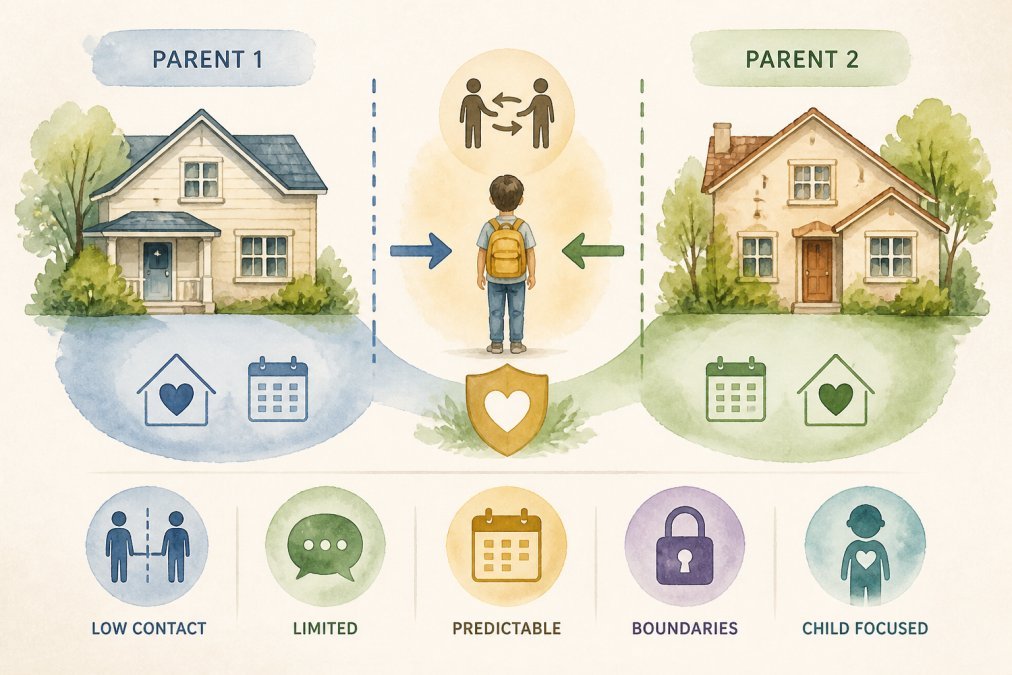
Traditional co-parenting assumes both parents cooperate toward the child’s best interest. With a hostile ex, that assumption breaks down. Parallel parenting is a structured approach where each parent operates independently within their own home and time, minimizing interaction and decision-making overlap. Instead of discussing every school choice together, each parent makes decisions in their domain.
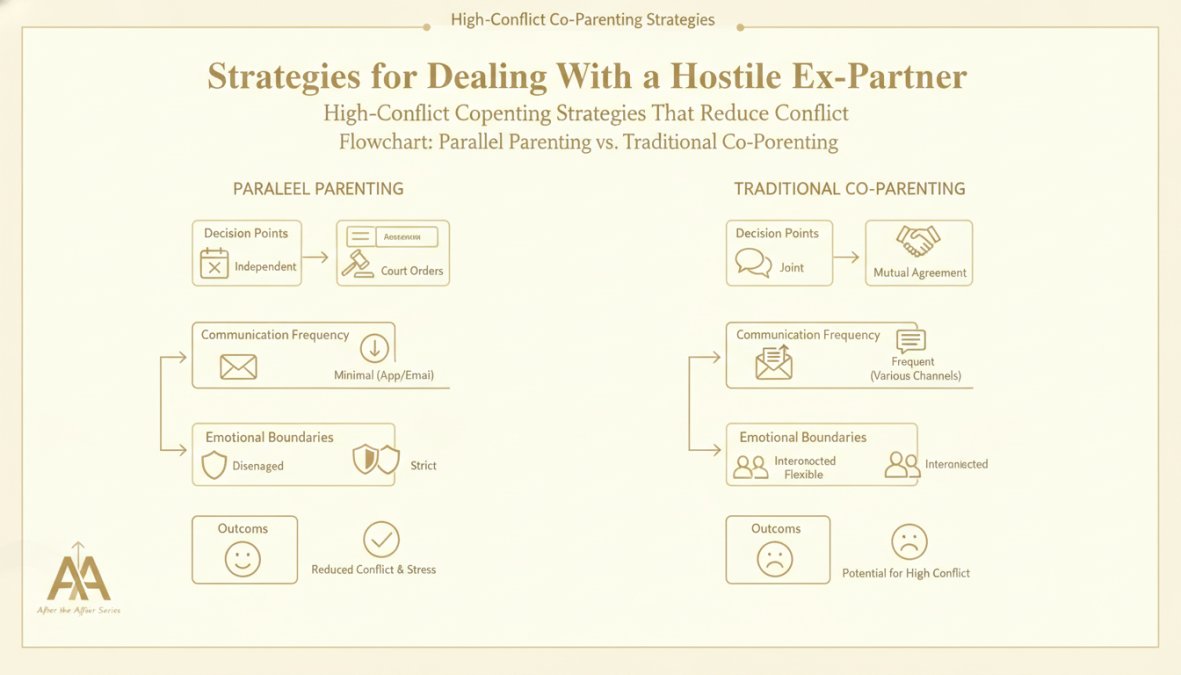
Parallel Parenting vs. Traditional Co-Parenting
Parallel parenting protects children from ongoing conflict exposure by reducing the number of decisions that require interaction between hostile parents. Many family law professionals now recommend it as the default for high-conflict situations rather than a last resort.
| Approach | Decision-Making | Communication Frequency | Emotional Boundaries | Best For |
|---|---|---|---|---|
| Traditional Co-Parenting | Joint decisions on major issues | Regular, collaborative | Low separation needed | Low-conflict, cooperative parents |
| Parallel Parenting | Each parent decides in their domain | Minimal, logistics-focused | High separation maintained | High-conflict, hostile ex situations |
Documentation and Communication Logs as Protection
Every conversation with a hostile ex should be documented. Keep records of all emails, text messages, phone calls (with dates, times, and summaries), custody schedule changes, and payments made or received. Use a co-parenting app like OurFamilyWizard that creates automatic documentation. The act of writing in a monitored space often makes hostile exes more measured because they know the record is permanent.
Write your own statements in neutral tone consistently. This makes it clear when your ex’s tone shifts into hostility or threats. Courts notice patterns: a single angry message is dismissed; 47 angry messages show a pattern of intimidation.
Communication With a Difficult Ex: Practical Methods
How you communicate with a hostile ex determines whether interactions escalate or de-escalate. You need communication methods designed specifically for high-conflict dynamics.
The Gray Rock Method and BIFF Responses
The Gray Rock Method is simple: become as uninteresting as a gray rock. Don’t share emotions, details about your life, or anything that gives your ex ammunition. Respond to logistics only, keeping answers brief, factual, and devoid of personal information.
BIFF responses take this further. BIFF stands for Brief, Informative, Friendly, and Firm:
- Brief: One or two sentences
- Informative: Answer the specific question only
- Friendly: Professional courtesy without warmth
- Firm: No room for negotiation or debate
Example: Hostile message: “You’re keeping the kids from me on purpose. I’m taking you back to court.”
BIFF response: “Pickup is Saturday at 2 PM as scheduled in the custody agreement. I’ll have the kids ready.”
You’re not trying to convince them you’re right. You’re documenting that you’re following the agreement.
Limiting Communication Channels and Using Safe Platforms
Establish clear communication channels and use only those channels. Set specific days and times for necessary phone calls. If your ex calls outside those times, don’t answer.
Recommended structure:
- Email or app-based communication: Creates documentation and gives you time to respond calmly
- Co-parenting apps: Platforms like OurFamilyWizard or Talking Parents are designed for high-conflict co-parenting with automatic logging and timestamping
- No social media contact: Block your ex on personal social media
When your ex demands multiple communication channels, set the boundary: “I’m available via email and the co-parenting app. Those are the channels I monitor for custody-related communication.”
Digital Safety and Cybersecurity Concerns
A hostile ex may attempt to access your accounts, monitor your location, or hack into your devices. Change all passwords to unique, complex combinations and enable two-factor authentication on email, banking, and accounts connected to your children. Turn off location services for apps that don’t need them. Monitor your accounts for unauthorized access: unusual login locations, unexpected password reset attempts, or strange activity.
Setting Boundaries With an Ex: Clear Rules and Enforcement
Boundaries with a hostile ex aren’t negotiable requests. They’re non-negotiable statements of what you will and won’t accept.
Written Agreements and Firm Boundary Statements
Every boundary should be documented in writing. Create a document outlining communication methods and response timeframes, custody schedule with specific times and locations, financial responsibilities and payment methods, what constitutes an emergency, and consequences for boundary violations.
Example: “Communication regarding the children will occur through [app name] only. Texts, calls, and emails will not be answered. Responses to app messages will be provided within 24 business hours.”
A written boundary is only as strong as your willingness to enforce it. If you ignore violations “just this once,” you’ve signaled that the boundary isn’t real. Enforcement is what makes boundaries work.
Managing Financial Abuse Tactics and Protecting Assets
Financial abuse is a common tactic in hostile relationships. Open a separate bank account in your name only and redirect your paycheck there. Document all financial agreements in writing: child support amounts, who pays for what expenses, and payment deadlines. If your ex fails to pay, document missed payments with dates. This becomes evidence if you need to pursue enforcement through the courts.
Protecting Children From a Hostile Ex: Practical Actions
Your children are watching how you handle this conflict. Your job is to shield them from the conflict while maintaining their relationship with their other parent (unless that parent is genuinely unsafe).
Child Welfare Considerations and Custody Disputes
Courts prioritize the child’s best interest, which typically includes maintaining relationships with both parents unless one poses a safety risk. However, exposing children to ongoing parental conflict is itself a form of harm. Document instances where your ex’s behavior directly impacts the children: aggressive communication in front of them, making derogatory statements about you, or using them as messengers.
If your ex is genuinely unsafe, work with a family law attorney to modify custody arrangements. A parenting coordinator, a neutral professional who helps resolve specific parenting disputes, can be more cost-effective than ongoing litigation.
Shielding Children From Conflict and Emotional Harm
Children don’t need to know about adult conflict. When your ex says negative things about you to the children, don’t respond with counter-attacks. Instead, respond calmly: “That’s between your mom and me. You don’t need to worry about it.”
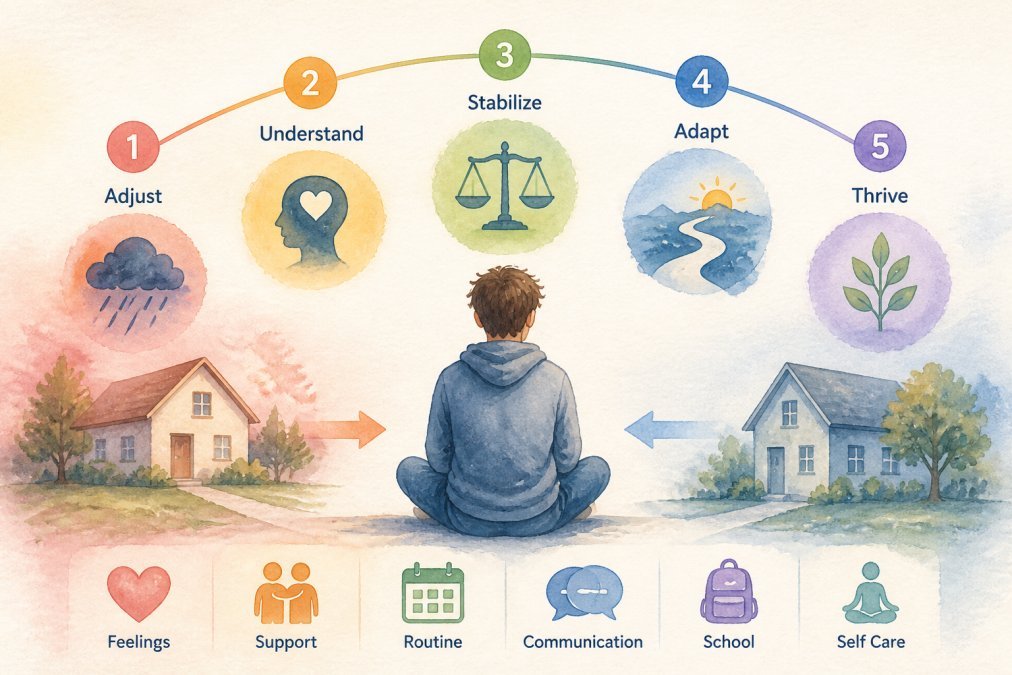
Create stability in your home with consistent routines, predictable responses, and emotional availability. Don’t use children as messengers or informants. Don’t ask them to relay messages or report back on what happens in the other home.
Legal Intervention: When Court Orders and Mediation Become Necessary
At some point, boundaries and communication strategies may not be enough. That’s when legal intervention becomes necessary.

Restraining Orders, Protective Orders, and Litigation
A restraining order prohibits your ex from contacting you, coming near you, or harassing you. To obtain one, you typically need to show a pattern of threatening or harassing behavior. Document everything and bring your records to court. If your ex violates a restraining order, that’s a criminal matter.
Litigation is expensive and emotionally draining. Avoid it if possible, but if your ex refuses to follow agreements, violates court orders, or poses a genuine threat to your children, litigation may be necessary. Work with a divorce attorney who has experience with high-conflict cases.
Working With a Divorce Attorney and Parenting Coordinator
A divorce attorney can draft clear custody agreements, negotiate with your ex’s attorney, and advise you on your legal rights. A parenting coordinator helps parents resolve specific disputes about parenting without returning to court. Both professionals cost money but are often cheaper than repeated litigation.
Managing Your Emotional Reactions and Achieving Detachment
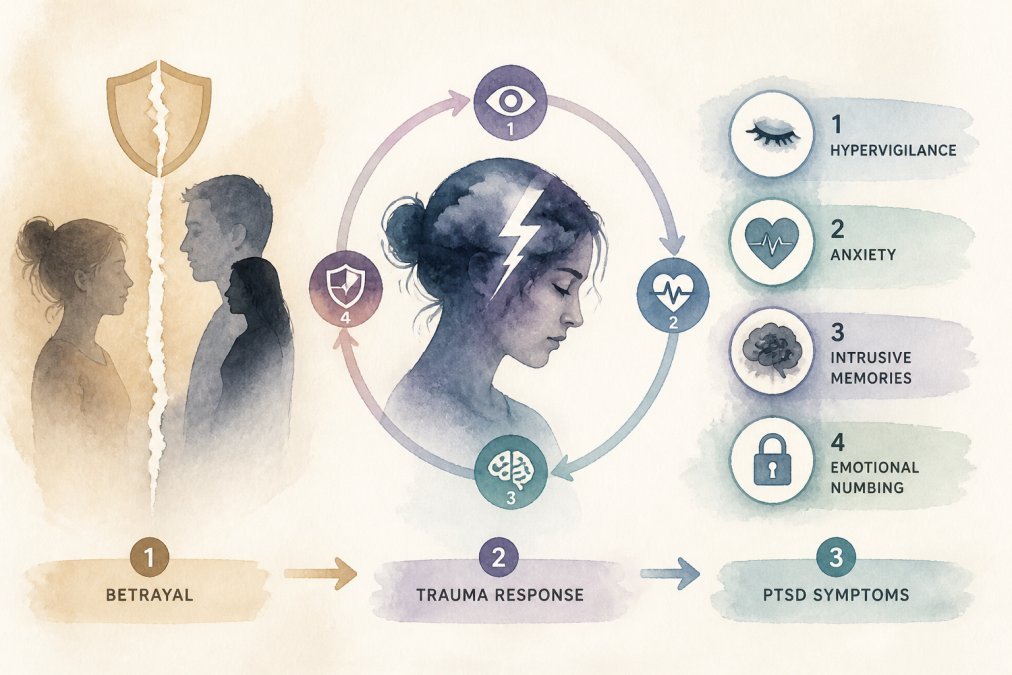
The most underestimated part of dealing with a hostile ex is managing your own emotional response. Detachment doesn’t mean not caring about your children; it means not letting your ex’s behavior control your emotional state.
When your ex sends a hostile message, pause before responding. Step away. Give yourself time to move out of emotional reaction and into calm, strategic response. Consider therapy specifically focused on high-conflict relationships to help you process the conflict and develop emotional resilience.
Strategies for Dealing With Hostile Ex Behavior: Scripts and Templates
Having scripts prepared ahead of time helps you respond from strategy rather than panic.
Real-World Communication Scripts for High-Conflict Situations
Scenario: Your ex accuses you of keeping the kids from them
Your response: “The custody schedule is [specific dates/times]. I’m following it. If you want to discuss changes, contact my attorney.”
Scenario: Your ex threatens legal action over a minor issue
Your response: “I’m open to discussing summer schedules through [co-parenting app]. Any changes to the custody agreement will go through our attorneys.”
Scenario: Your ex makes derogatory comments about you to the children
To the child: “That’s between your mom/dad and me. You don’t need to worry about it. I love you, and nothing will change that.”
To your ex: “I need you to stop making negative comments about me to the children. If this continues, I’ll discuss it with my attorney.”
Email Etiquette and Written Response Templates
Assume everything you write will be shown to a judge. Keep every message professional, brief, and unemotional.
Template for logistical requests:
“Hi [Ex’s name], I’m writing to confirm [specific request/change]. The current schedule shows [current plan]. Please confirm receipt by [date].”
Template for boundary enforcement:
“I’ve noticed [specific behavior/pattern]. Moving forward, I need [specific boundary]. I’m committed to following the custody agreement and expect the same.”
Template for refusing unreasonable requests:
“I’m unable to accommodate that request. The current agreement states [relevant clause]. If you’d like to discuss modifications, we can work through [attorney/mediator/app].”
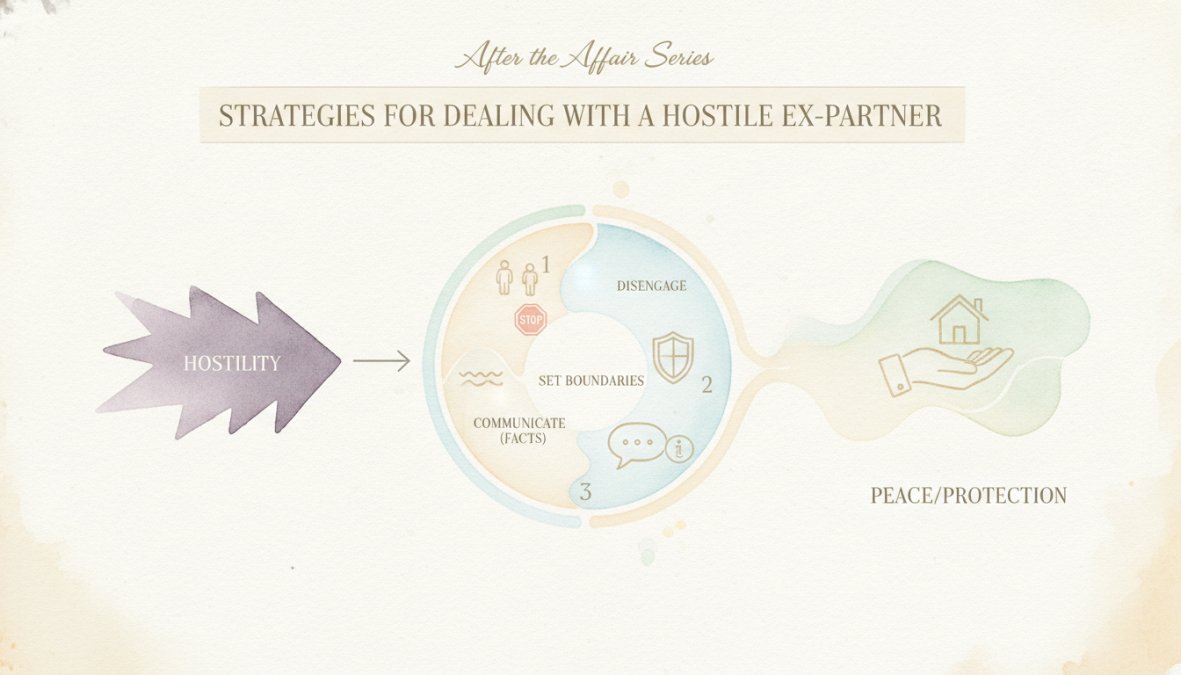
Dealing with a hostile ex-partner is one of the most draining challenges you can face, especially when children are involved. The strategies covered here, from parallel parenting to documentation to emotional detachment, aren’t quick fixes. They’re frameworks that work over time when applied consistently. Rather than generic advice, structured resources offer immediate, actionable tools you can use in the moment when conflict escalates.
Frequently Asked Questions
What are the best strategies for dealing with a hostile ex-partner who refuses to communicate reasonably?
The most effective strategies for dealing with a hostile ex include limiting communication channels to written formats only, using the Gray Rock Method (responding with boring, factual information), and implementing parallel parenting rather than traditional co-parenting. Documentation of all interactions is critical, keep detailed communication logs and written records. If your ex becomes aggressive or harassing, consider legal intervention through a divorce attorney who can establish court-ordered communication protocols or protective orders. Many high-conflict situations improve dramatically when you remove the expectation of reasonable dialogue and focus instead on protecting your boundaries and children’s welfare.
How can I protect my children from a hostile ex while maintaining their relationship?
Protecting children from hostile ex behavior requires balancing their safety with their right to a relationship with both parents. Shield them from adult conflict by never discussing custody disputes or your ex’s aggressive behavior in front of them. Use parallel parenting strategies that minimize direct interaction between you and your ex. Maintain consistent routines, clear boundaries about what information children should handle, and age-appropriate explanations. If your ex is using children as weapons or engaging in harassment, document these incidents and consult a family law attorney about custody modifications or parenting coordinator involvement. Child welfare always takes priority in legal proceedings.
What communication methods work best when dealing with a difficult ex?
The safest communication methods for dealing with a difficult ex are written channels that create automatic documentation: email, text message, or specialized co-parenting apps. Avoid phone calls or in-person meetings when possible, as these lack records. Use the BIFF response method (Brief, Informative, Friendly, Firm) to keep messages neutral and non-triggering. Limit communication to child-related logistics only, avoid personal topics or emotional engagement. Some people find that using specific communication apps designed for co-parenting provides additional protection and structure. Always assume your communications may be reviewed in court, so maintain professional tone and factual accuracy in every message.
When should I seek legal counsel or court intervention for a hostile ex?
Consult a divorce attorney if your ex engages in harassment, threats, or aggressive behavior that escalates despite your boundary-setting efforts. Legal intervention becomes necessary when documentation shows a pattern of hostile behavior affecting child welfare, when your ex violates existing agreements, or when you need to establish written court orders to enforce boundaries. A parenting coordinator can help mediate disputes before litigation becomes necessary. Restraining orders or protective orders may be appropriate if you face threats or physical danger. Early legal consultation protects your rights and your children, don’t wait until situations become severe to seek professional guidance.
How do I set firm boundaries with an ex who constantly tests my limits?
Setting boundaries with a hostile ex requires written agreements, consistent enforcement, and emotional detachment. Document your boundaries in writing, through email confirmation or formal written agreements, so expectations are clear. Use firm, neutral language without explanation or justification (which high-conflict individuals use to argue). Implement consequences consistently: if your ex violates boundaries, respond with documented written notice rather than engaging in debate. Parallel parenting naturally enforces boundaries by minimizing interaction. Avoid the temptation to negotiate or explain your boundaries, this signals they’re negotiable. If your ex continues testing limits despite clear communication, escalate to legal intervention and let your divorce attorney enforce boundaries through court orders.
What digital safety risks should I consider when communicating with a hostile ex?
Digital safety is critical when dealing with a hostile ex. Assume your communications may be monitored, hacked, or forwarded to others, avoid discussing sensitive information via email or text. Use strong, unique passwords on all accounts and enable two-factor authentication. Be aware that some high-conflict individuals engage in cyberstalking, monitoring location data, or accessing shared accounts. Consider using dedicated co-parenting communication apps that provide security and automatic documentation. Never share financial information, passwords, or personal details in digital communications. If you suspect monitoring or hacking, change passwords immediately and consult a cybersecurity professional. Document any suspicious digital activity as evidence if legal intervention becomes necessary.
Is parallel parenting better than co-parenting when dealing with a high-conflict ex?
Parallel parenting is often more effective than traditional co-parenting when dealing with high-conflict personality types. Parallel parenting minimizes direct interaction and decision-making coordination, each parent operates independently during their parenting time with minimal communication. This reduces triggering situations and conflict escalation. Traditional co-parenting requires ongoing communication and cooperation, which becomes toxic when one parent is hostile or emotionally volatile. Parallel parenting allows you to maintain healthy boundaries, reduces emotional volatility exposure, and protects children from witnessing conflict. It’s particularly valuable when your ex displays narcissistic traits or aggressive behavior. Work with a parenting coordinator or family law attorney to establish parallel parenting guidelines in your custody agreement.